Wednesday, November 21, 2012

Cross Country 2012 Recap


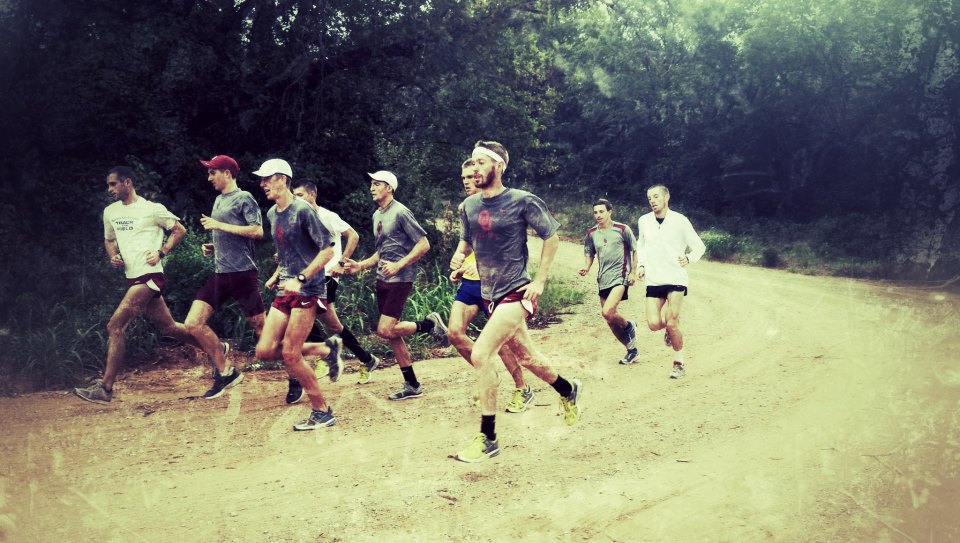
My last cross country season is in the books and I’m at home for Thanksgiving, so I have time to reflect on the last few months, and what better place to do that than here? Now that the season is over I’ll talk about the five major races we competed in and analyze them in the context of what we were trying to achieve as a team. The team has finished 6th and 5th at NCAA’s the past two years, so the next logical step for the program this year was to finish 4th or better. Everything was done with this goal in mind.


Friday, August 17, 2012

Oklahoma

I know I haven't updated on anything in a while, but that was both intentional and a necessity. I had a good summer of training with some good guys in a location very conducive to running, and now I'm finally in Norman, OK at the University of Oklahoma. I'm in the midst of the necessary school and NCAA meetings and other red tape, but once this is over we start practice and get the season going in earnest.

I don't have much that I can say in the public domain, other than the team has a bunch of great guys and we are ready to have a great year. Of course, all of other top 10 teams in the country are saying that right now too.

The weather has been pretty forgiving and it's not too bad to run at either end of the day, though I'm sure that will get worse before it gets better.

It will be quite the adjustment being so far away from home for nine months but I know it will be worth it in the end. I can't wait to see how all of our training pays off when it comes time to put it all on the line in November!

Wednesday, June 6, 2012

Back to Summer Training

Last week was my first full week of real summer training. To me, summer training, and off-season training in general, is the most important training phase of the year. Lydiard wasn't kidding when he said that the base phase determines your performance level for the entire training cycle.

I think a lot of people either don't conceptualize or just don't understand summer training. In high school I just did easy runs for three months, came into preseason and started working out. I never ran as well in cross country as I did in track, and it's clear to me that it's because I let myself lose too much fitness over the summer. I would come into mid-August having run a lot of 60 mile weeks, but never run anything harder than easy runs. In the winter, I did long intervals and occasional tempo runs and always ran much better in May than I did in November. Last year, I had the best fall season of my life and I think a lot of it was because I decided to run a half marathon in mid-September. That forced me to get in good shape for that starting earlier than I ever had, and that fitness carried through for arguably the rest of the year.

Canova says that 80% of training is just training to train. By that he means that 80% of training could be considered foundation work for the highly specific workouts in the two months or so before a peak. Summer training for cross country is exclusively training to train. The whole point is to get your body ready to start working out and racing come September. It is a time for building strength and a big endurance base.

And now we arrive back at the big mistake: people don't have the right idea of what endurance means. Endurance training is by far the most general of the phases. It is an almost intentional lack of specificity. Over 50 years ago Lydiard showed everyone that endurance training works for every race 800m and up (unless the 800 guy is a sprinter moving up, then it probably wouldn't work very well). A lot of people also misunderstand Lydiard's base phase. It is NOT easy running; it is "steady running," and he set 100 mpw as a benchmark. That is really really hard to do, and it's also the main reason (along with periodization) why his principles are behind so many gold medal performances.

And finally on to what is the right way to train in the summer. I guess this is more accurately what I think is the best way to train in the off-season, since I'm not stupid enough to think I've got it all figured out. Part 1 lasts until you get up to whatever your desired peak mileage is. In my opinion it is best to get there sooner rather than later to give your body time to adjust to the workload before introducing another stimulus, i.e. workouts. Part 2 lasts for the rest of the summer, and consists of long tempo runs and intervals. These form a good mental break from the easy runs and are really the immediate precursor to XC-specific workouts.

Other stuff: I like to do hillsprints when I feel motivated enough. These are another thing a lot of people do wrong, because no one is really patient enough to do them with enough recovery. I'm not an expert but Canova is the authority on them and why they're a good idea. Bodyweight exercises and drills are probably a good idea too, if nothing else to strengthen your core and keep your form from getting too sloppy. Hitting the weight room for the compound lifts is good if you can find the time, but know what you're doing before you try and squat 300 and kill yourself.

Monday, May 21, 2012

How They Train upload

In the days before graduation I've had some spare time. I decided to upload a rare piece of running history that I have in my collection, an original edition of Track & Field News' How They Train:

How They Train (1959)

I'm hoping for no copyright issues, since it was published so long ago and I don't think the copyright was really renewed They published subsequent editions but they were all different and updated with current athletes so hopefully T&FN doesn't get mad at me!

Edit: The first link was to a poorly scanned/incomplete copy. I fixed the link, but to see it properly download it and rotate it counterclockwise.

Friday, May 18, 2012

2012 Track Season Recap

This has been quite the season for me. Longer, harder and more fulfilling than any other track season to date.
  • I competed at a high level since February when I ran a 4:08 mile. I held that form very consistently until May. I think that I improved my 5k fitness throughout the season, and I'm happy with that because holding my mile fitness at a high level while improving 5k fitness is not an easy thing to do. 
  • I adjusted my personal goals this year to run for time instead of run for place. I did this because there really weren't any meets that I could run for place at (no conferences, IC4A's, etc) and because I wanted to show the graduate schools that I applied to that I was worth their attention. After I ran that 4:08 indoors, I set my goals for the year to run < 3:50 and 14:10. 14:10 was the goal I had set for myself about two years ago when I got really serious about running, and 3:50 was what I knew I could run based on my form in February. I am perfectly happy walking away from this year having run 3:49 and 14:09.
  • My general attitude towards training and racing is much improved from past years. I relaxed a little bit this year with regard to mileage and I think I was better rested for the big races this season compared to last track season. Part of this was due to not having the pressure of a team to race for, but most of it was due to more confidence is myself and in my training plan. I raced more often to hone tactical sense and picked my spots to really run well. 
  • I was able to keep improving consistently, not only through this season but through my college career. This goes back to the goals I set for myself, but I doubt that many guys can say they improved 17 seconds in the 1500 (4:06 to 3:49) and 54 seconds in the 5k (15:03 to 14:09) over their four years in college. I had no major injuries and was able to get tuned into my body enough that I could catch any potential problems early so I could keep training and racing. 
Any negatives? Not that I could really control. Obviously it would have been nice to still have a real team and be able to mix it up in the championship meets, but I think that I played the hand I was dealt about as well as I could have. 

I'm leaving this season very satisfied; I planned my training around running goal times, I went to the meets that I needed to be in to run those times, and I executed my race plans and came out with the times I expected. No surprises this season, which was fine with me. Surprises can mean unexpected good things, but in  running they usually mean bad things. No surprises also means that I have a good handle on what my body can handle and what training stimuli produce what responses. 

What do I want to do next year? Well, I definitely have more room in the 1500/mile than I thought I had 6 months ago. I'm sure that if I did more specific training in season for that I would run even better than I did this year. However, I don't want to sacrifice the 5k for the 1500, since I still think I'll eventually be better in the 5k over the shorter distance. Next year will be an exciting time and I'm already looking forward to it!

Tuesday, May 15, 2012

Swarthmore 1500m

Last night was my last official race of the season, and my last one in a Delaware uniform. As is the custom at UD for our last race, a bunch of us went up to the Swarthmore Last Chance meet to run a 1500 or a 5k. For years we have known about this little gem of a race. It is always perfect conditions and great competition for all races 800 and up. As luck would have it, this year some other guys you might have heard of found out about it too. Adrian Blincoe (5k Olympian from New Zealand) lives nearby in Bryn Mawr and put together quite the race for the 1500. The fast heat included names like Nick Willis, Will Leer, Lee Emanuel, and Dan Huling. Willis was to pace thru 1200 in 2:51 and let the other guys chase the Olympic A standard. This race went off while I was in line to get my number, with all my sweats and trainers on. When I realized I was in the next heat, I panicked a little bit and so I didn't get to really pay attention to the big boys in the fast heat. What I was able to watch was amazing; Willis did a great pacing job and stepped off at 1300, and unheralded Merber blew by the field in the last 200 to win in 3:35. A debatable American collegiate record for the guy who had a 3:42 PR coming in! That was definitely an inspiration to run fast for my race.

As to my race: I was confused when I was in the fast non-pro race, because I was 20th seed coming in. Apparently they just shuffled the first two heats randomly together. There were four Columbia guys in the race, undoubtedly fired up watching their teammate Merber run 3:35, who were going for NCAA times. One guy said he was rabbiting through 1200 in 2:57, which I knew was too fast for me. I got out well and the first 400 was 61, which I felt was about right. I was in a nice group while the Columbia guys rocketed ahead of the field. During the second lap I could feel the group slowing, so I went around just before the 800 (2nd lap = 63). I picked up and started reeling in a guy that had fallen off the leaders. At 1200 (3rd lap = 61) I was with two guys and I kicked with 300 to go. One guy blew by me on the backstretch but I caught him at the line and beat the other guy. My final time was 3:49.50, which was 0.17 off the school record (last 300 = 43). I wasn't too upset about missing the school record; I ran what I knew I could run and it wasn't a surprise since I ran 4:08 in February. I just went out and executed the plan.


I felt good after the race and on the cooldown, and I think I could have squeezed another second out of the race if the second lap had been better, but it as good a race as I could have realistically hoped for. I PR'd on this track two years ago in the 5k and almost everyone runs fast here, so much so that it's become a running joke on our team to call it a 390m long track. One more "race" in the season, an 800 against some teammates just to see what I can do, and then I'll shut it down. I think that if there were more fast 1500s in the coming weekends I could keep peaking and run a little bit faster for about two weeks and then the wheels would start coming off. Right now I'm content with the season; I did what I set out to do and my PR's are right where I wanted.

Thursday, May 10, 2012

Kehoe Twilight Meet (UM)

It's actually been a week since this race, but I forgot about it since it was not exactly a highlight. Four guys on the team, including myself, drove down on May 3rd to race at Maryland's twilight meet, since we had a big gap in our racing schedules and wanted to get something in. We entered a little bit late, but the meet director seemed fine with it and let us in. I seeded myself at 3:50 in the 1500 in the hopes that it would be a fast race and I could get pulled along.

The fun began when we went to check in and I noticed that I was in the second (and slower) heat. This confused me, since it was a smaller meet and I didn't think that a 3:50 seed would put me 15th. I thought about asking the people in charge about this, but then a Navy guy started talking to us and said he would be rabbiting a teammate through 1200 in 3:00. Once I heard this, I figured that the first heat actually was that fast and that if everyone was seeded around 3:45 then maybe I should be in the second heat. Well, once the first heat went off I could immediately tell that that's where I should have been. The Navy guy ended up coming through 1200 in 3:06 (right where I wanted to be) with no one near him. The race was won in 3:56.

My race could not have been less eventful. I led wire to wire in the slow time of 3:57.5. Even during the race I was discouraged about the situation and after the first lap I mentally threw in the towel for a fast time. In hindsight I'm not too upset about it; racing is just one of those things where it's not going to be perfect every time out, but try it enough times and you'll eventually hit the perfect day.